Abstract
Residential solar energy storage systems have become a mainstream solution for families pursuing stable, self-sufficient power supply, and the core control hub that determines the overall system operation efficiency is the integrated photovoltaic energy storage inverter. This article focuses on analyzing the complete technical architecture, multi-scenario application logic, built-in intelligent management modules, long-term equipment operation stability and user-friendly remote monitoring functions of SP Series Household Photovoltaic Energy Storage Inverter. It sorts out the matching rules between different power models and household power consumption demands, interprets the value brought by wide-range MPPT solar charging, pure sine wave output and multi-layer safety protection, and eliminates common misunderstandings about hybrid photovoltaic storage equipment through detailed parameter comparison and FAQ content. All technical analysis avoids financial-related measurement indicators, and focuses on the equipment’s compatibility, environmental adaptability and long-term operation reliability, providing systematic reference content for users who plan to build residential photovoltaic storage microgrids.
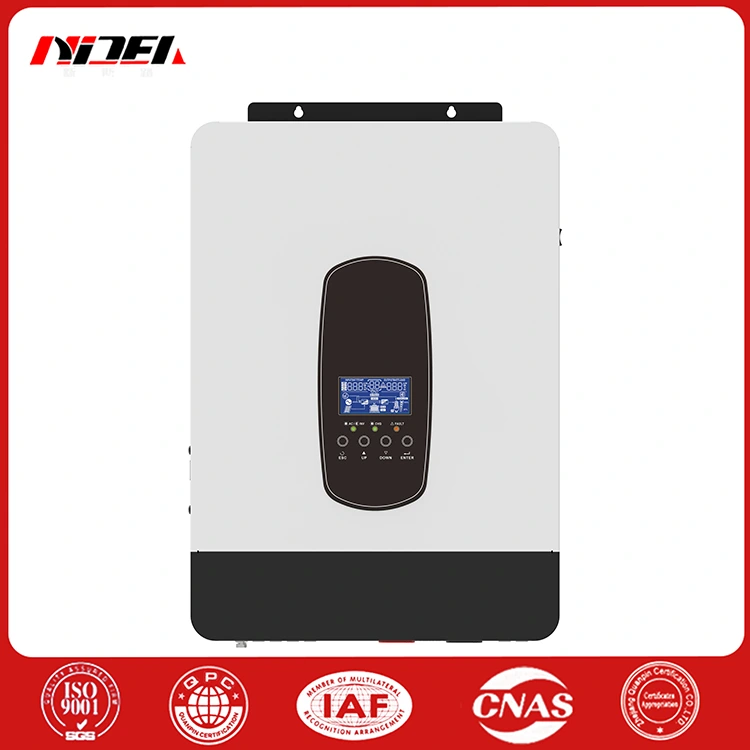
Table of Contents (Click Each Link To Jump To Corresponding Chapter)
- 1. Core Definition And Internal Integrated Structure Of Household Photovoltaic Energy Storage Inverter Equipment
- 2. Full Power Model Parameter Breakdown Of The SP Series Product Line
- 3. Core Technical Modules That Improve Solar Energy Utilization Efficiency
- 4. Multi-Mode Energy Priority Programming And Household Scene Matching Logic
- 5. Built-In Safety Protection System And Low-Temperature Adaptation Performance
- 6. Remote Communication Monitoring System And Intelligent Heat Dissipation Design
- 7. Frequently Asked Questions About Household Photovoltaic Storage Inverter Operation
- 8. Professional Customization Support For Residential Solar Energy Storage System Matching
1. Core Definition And Internal Integrated Structure Of Household Photovoltaic Energy Storage Inverter Equipment
Before exploring the performance advantages of integrated photovoltaic storage inverters, it is necessary to clarify the positioning of this type of equipment in residential energy systems. A standalone solar inverter can only convert DC power generated by photovoltaic panels into AC power for instant household use, while an independent battery charger can only complete single-channel charging and discharging management. Traditional split configuration requires multiple pieces of equipment to work together, which brings troubles such as complex wiring, large installation space occupation and inconsistent signal coordination between modules.
Integrated household photovoltaic energy storage inverters integrate three core functional modules of solar MPPT charging controller, bidirectional AC-DC inverter and grid-battery power switching manager into one compact cabinet. All power conversion, energy scheduling and signal detection circuits are optimized and matched by factory pre-calibration, which greatly reduces the coordination loss between discrete equipment. As a mature integrated product line developed for family microgrid construction, SP Series Household Photovoltaic Energy Storage Inverter fully inherits this integrated design idea, and optimizes the circuit layout for different household power consumption scales from 2200VA to 7000VA.
1.1 Three Core Internal Functional Modules
- MPPT solar charging module: Responsible for capturing the maximum power output point of photovoltaic panels under different light intensities, converting variable DC voltage from PV arrays into stable charging current for lithium batteries, and supporting a wide input voltage window to adapt various mainstream household solar panel specifications.
- Bidirectional DC-AC inversion module: Completes two-way power conversion. In charging state, it converts grid AC power into DC to supplement battery power when sunlight is insufficient; in power supply state, it converts battery DC power into standard 230V pure sine wave AC power for all household electrical loads.
- Intelligent energy switching management module: Real-time collects voltage signals of photovoltaic input, battery terminal and municipal grid, automatically switches power supply channels within millisecond-level conversion time, and supports manual programming of energy supply priority to meet customized household power use habits.
1.2 Structural Advantages Of All-In-One Cabinet Layout
The internal circuit layout of the product cancels redundant wiring between independent controllers. All power transmission channels are integrated copper bar connections inside the shell, which reduces line impedance and avoids energy loss caused by loose external wiring during long-term use. The shell adopts split heat dissipation structure, separating the high-power power tube area and signal control board area, so that heat generated during high-load operation will not interfere with the precision detection circuit, effectively extending the stable service cycle of internal electronic components.
2. Full Power Model Parameter Breakdown Of The SP Series Product Line
The product line covers four core power specifications to match small apartment, medium-sized family and large villa power consumption scales respectively. Each model is equipped with matched battery voltage grade, maximum solar charging current and surge power output capacity, avoiding the waste of equipment performance caused by blind model selection or insufficient load bearing capacity. The following complete specification table sorts out the fixed standard parameters of each model for user reference in system matching design.
| Model Number | Rated Power (VA/W) | Matched Battery DC Voltage | Max Solar Charging Current | Instant Surge Power | PV Array Max Open Circuit Voltage |
|---|---|---|---|---|---|
| SP-2200 | 2200VA / 1800W | 12VDC | 60A | 4400VA | 450VDC |
| SP-3200 | 3200VA / 3000W | 24VDC | 80A | 6400VA | 450VDC |
| SP-4000 | 4000VA / 3600W | 24VDC | 80A | 8000VA | 450VDC |
| SP-7000 | 7000VA / 6200W | 48VDC | 110A | 14000VA | 450VDC |
2.1 Parameter Matching Logic For Household Scenarios
- SP-2200 small power model: Suitable for single-room apartments or holiday cabins with low daily power consumption, only supporting small loads such as lighting, laptops and small refrigerators, matched with 12V low-voltage battery packs, with small overall cabinet volume and easy wall-mounted installation in narrow storage spaces.
- SP-3200 and SP-4000 medium power models: The most widely used specifications for ordinary three-bedroom households, can drive washing machines, air conditioners and kitchen small appliances simultaneously, 24V battery system reduces high current loss compared with 12V models, and the maximum solar charging current reaches 80A to support medium-capacity photovoltaic arrays.
- SP-7000 high-power model: Targeting large villas and multi-story residential buildings, 48V high-voltage battery architecture greatly reduces wiring current, supports large-scale PV array layout, and the 110A super large MPPT charging current can quickly fill large-capacity lithium energy storage batteries within a short sunshine window.
2.2 Universal Standard Parameters Shared By All Models
All products in the series adopt consistent AC input and output standards to unify the difficulty of installation and after-sales maintenance. The rated output voltage is fixed at 230VAC with ±5% voltage fluctuation tolerance, and the frequency automatically identifies 50Hz or 60Hz without manual switching operation. The PV input MPPT working window uniformly covers 55VDC to 450VDC, so users do not need to recalculate voltage matching rules when replacing or expanding solar panels in the later stage of system operation.
3. Core Technical Modules That Improve Solar Energy Utilization Efficiency
The core value of household photovoltaic storage equipment lies in fully capturing and storing renewable solar energy, and avoiding the waste of light resources caused by narrow voltage range or low charging power of traditional inverters. This product line is equipped with three efficiency-enhancing technical modules, which jointly improve the effective utilization rate of photovoltaic arrays under unstable light conditions such as morning, evening and cloudy days.
3.1 Wide-Range MPPT Solar Tracking Technology
The 55-450VDC ultra-wide PV input window is a key technical highlight of the whole series. Many low-cost hybrid inverters on the market only support MPPT starting above 100VDC, which cannot collect weak light power generated by solar panels at dawn and dusk, resulting in a large amount of available solar energy being discarded. The equipment can start tracking power generation when the PV terminal voltage reaches 55VDC, capturing low-power power output in weak light environments and extending the effective power collection time of photovoltaic arrays every day.
The built-in high-power MPPT controller supports real-time dynamic tracking of the maximum power point with millisecond response speed. When cloud layers block sunlight and the panel output voltage fluctuates sharply, the module can quickly adjust the charging duty cycle to lock the optimal power output point without obvious power loss during the switching process. The maximum energy conversion efficiency of the whole machine reaches 98%, minimizing the energy loss in the process of converting solar DC power into battery stored energy.
3.2 Pure Sine Wave AC Output Circuit Design
Many entry-level off-grid inverters adopt modified sine wave output, which contains a large number of harmonic components. When supplying power to precision electronic equipment such as desktop computers, smart televisions and frequency conversion air conditioners, it will cause abnormal noise, equipment heating and shortened service life of internal circuits. Every model of SP Series Household Photovoltaic Energy Storage Inverter outputs standard pure sine wave AC power completely consistent with municipal grid waveform, without extra harmonic interference.
- Stable operation support for precision electronic equipment such as computers, monitors and smart home control hosts without signal distortion or crash faults.
- Reduce the internal coil loss of inductive loads such as refrigerators, air conditioner compressors and water pumps, lowering the heat generated during equipment operation and extending the service cycle of household appliances.
- No electromagnetic interference to surrounding audio equipment, monitoring cameras and wireless communication devices, avoiding screen flicker and audio noise caused by power supply waveform defects.
3.3 Bidirectional Intelligent Battery Charging Management Compatible With Lithium BMS
The equipment reserves special communication interfaces for lithium battery BMS systems, realizing two-way signal interaction between the inverter and energy storage battery packs. The inverter can real-time read battery cell voltage, temperature and remaining capacity data, dynamically adjust charging current and floating charge voltage according to the actual state of the battery, avoiding overcharging, undercharging and overheating damage to lithium cells caused by fixed charging parameters of ordinary inverters without BMS communication function.
Different floating charge and overcharge protection voltage thresholds are set for each battery voltage specification. When the battery reaches the floating charge voltage standard, the charging current will automatically decrease to maintain a safe full-charge state; once the terminal voltage touches the overcharge protection threshold, the MPPT solar charging channel and grid AC charging channel will be cut off synchronously to form double-layer battery safety protection.
4. Multi-Mode Energy Priority Programming And Household Scene Matching Logic
Household power consumption habits vary greatly among different families: some users hope to give priority to consuming solar power to reduce dependence on municipal grid power supply; some families in areas with unstable grid power supply set battery backup as the primary energy source to avoid power outages; users with grid power supply can also set grid charging as the supplementary channel for batteries on continuous rainy days. This series of inverters supports programmable energy supply priority switching, allowing users to customize energy scheduling logic according to living scenarios.
4.1 Three Customizable Energy Supply Priority Modes
- Solar energy first mode: The system takes photovoltaic power generation as the primary power supply channel. Solar power directly supplies household loads first, and excess energy charges the battery pack. Only when solar power is completely exhausted and the battery capacity drops to the set threshold will the system automatically switch to municipal grid power supply, maximizing the consumption of self-generated solar energy.
- Battery energy first mode: Suitable for areas with frequent grid power failures. The battery pack bears the main power supply task all day long. Solar panels only charge the battery when there is surplus power generation, and the grid only intervenes to charge the battery when the battery power is exhausted, ensuring continuous power supply to critical household loads such as medical equipment and refrigerators storing fresh food.
- Municipal grid supplementary mode: Applicable to residential areas with stable grid power and long-term rainy weather. The grid can assist in charging the battery pack when solar power generation is insufficient, and the battery only intervenes for power supply during short-time power grid fluctuations to balance the instantaneous peak power consumption of household appliances.
4.2 Millisecond-Level Power Channel Switching Adapted To Different Load Types
The equipment sets two different power conversion time standards to match different load sensitivity requirements, fully avoiding equipment shutdown faults caused by power switching interruption:
- 10ms fast switching standard: Designed for precision electronic loads such as desktop computers, servers and monitoring hosts. The ultra-short conversion time ensures that the equipment will not trigger automatic shutdown or data loss during grid-battery power switching.
- 20ms universal switching standard: Suitable for conventional household resistive and inductive loads such as lighting, refrigerators and water heaters. The slightly extended conversion time can reduce the instantaneous impact current generated during channel switching and protect the internal power tube circuit of the inverter from impact damage.
Users can freely switch the conversion time mode through the operation panel according to the main electrical equipment running at home, without additional hardware modification or circuit transformation work, which greatly improves the scene adaptability of the whole system.
5. Built-In Safety Protection System And Low-Temperature Adaptation Performance
Safety is the primary evaluation standard for household electrical equipment installed in living spaces. This series of inverters integrates multi-layer hardware and software dual protection circuits, covering all common fault risks that may occur during long-term operation of photovoltaic storage systems, and is equipped with special cold start function to cope with low-temperature installation environments in high-latitude or high-altitude residential areas.
5.1 Full-Coverage Automatic Fault Protection Functions
- Overload protection: Real-time detects the total AC output power. When the load power exceeds the rated power of the model for a continuous period, the system will first send an audible and visual alarm signal, and automatically cut off the AC output channel if the overload state persists to avoid burning internal power components.
- High temperature protection: Multiple temperature sensors are distributed on the power tube, transformer and battery connection terminal inside the cabinet. Once the internal temperature exceeds the safe operating threshold, the fan will run at full speed for heat dissipation; if the temperature continues to rise, the inverter will stop inversion output to cool down automatically.
- Output short-circuit protection: Instantly cut off the AC output circuit within microseconds when the live wire and neutral wire of the output terminal are short-circuited, avoiding fire risks caused by short-circuit current impact on wiring and cabinet shell.
- Battery overcharge and overdischarge dual protection: Combined with hardware voltage detection circuit and BMS communication data, the system cuts off charging or discharging channels respectively when the battery reaches the upper limit charging voltage or lower limit discharge voltage to prevent irreversible damage to lithium battery cells.
5.2 Wide Temperature Operating Range And Cold Start Function
The standard operating temperature window of the equipment covers -10℃ to 55℃, and the storage temperature range extends from -15℃ to 60℃, adapting to seasonal temperature changes in most residential areas around the world. Many similar inverters on the market cannot start normally when the ambient temperature is lower than 0℃, and the battery discharge capacity will drop sharply in low-temperature environments, leading to system shutdown in winter.
The independent cold start module built in the cabinet can activate the battery preheating auxiliary circuit when the ambient temperature drops below zero, preheat the battery terminal connection area and internal power circuit to the minimum safe operating temperature before formal startup, ensuring that the equipment can operate stably in low-temperature winter environments without manual preheating operation by users. The internal circuit board adopts low-temperature resistant electronic components, and the heat dissipation channel is designed to avoid frost accumulation inside the cabinet under high humidity and low temperature conditions, supporting normal operation under 5% to 95% non-condensing relative humidity environment.
6. Remote Communication Monitoring System And Intelligent Heat Dissipation Design
Modern residential energy management puts forward higher requirements for real-time data viewing of photovoltaic storage systems. Traditional inverters without communication functions require users to check the equipment running status on-site every day, which cannot timely find hidden faults such as PV panel power generation attenuation and battery abnormal charging. This series reserves standard wired communication interfaces and optional wireless monitoring modules to realize full remote data visualization.
6.1 Multi-Channel Communication Interface Architecture
Two independent RS485 communication ports are pre-installed on each model, realizing signal separation between battery BMS communication and remote monitoring transmission to avoid signal crosstalk interference:
- The first RS485 port is dedicated to connecting lithium battery BMS, exclusively transmitting battery cell temperature, voltage and remaining capacity data, ensuring stable real-time interaction between the inverter and the energy storage battery pack without being occupied by remote monitoring data transmission.
- The second RS485 port can be switched to RS232 signal output, used for wired connection with desktop monitoring hosts or industrial control equipment, supporting long-distance wired data transmission for users who need to build centralized energy management platforms.
Users can select optional GPRS or WiFi wireless communication modules according to their home network conditions. After installing the wireless module, the system can upload real-time data such as photovoltaic power generation, battery charge and discharge power, household load power consumption and grid input power to the cloud server, and users can view all operating parameters remotely through mobile phones or computers at any time without being restricted by the installation location of the inverter.
6.2 Temperature-Sensitive Intelligent Variable-Speed Fan Heat Dissipation
Fixed-speed fans equipped on most low-cost inverters run at full speed all day long regardless of the equipment load and internal temperature, which brings continuous running noise interference to the living space and accelerates fan bearing wear to shorten the service life of heat dissipation components. The intelligent fan control system of this series collects real-time internal temperature data through multiple sensors to dynamically adjust the fan operating speed:
- When the equipment runs under light load and the internal temperature is low, the fan maintains low-speed silent operation, greatly reducing mechanical running noise and adapting to installation positions such as living rooms and bedrooms.
- Under medium and high load conditions, the fan speed increases synchronously with the temperature rise to strengthen air circulation heat dissipation, ensuring that the internal power circuit will not exceed the safe operating temperature during long-time high-power output.
- If the equipment enters standby state without load output, the fan will automatically stop rotating to eliminate idle noise and reduce unnecessary mechanical loss of heat dissipation parts.
The fan adopts silent bearing materials, and the air duct inside the cabinet is optimized to reduce air flow turbulence noise. Even when running at full speed under high load, the overall noise level will not interfere with daily rest and work of family members, solving the noise pain point of high-power photovoltaic storage inverters installed indoors.
7. Frequently Asked Questions About Household Photovoltaic Storage Inverter Operation
Q1: Can different brands of lithium battery packs be matched with this series of inverters?
A1: The equipment reserves universal RS485 BMS communication protocol interface, which can be adapted to most mainstream household lithium iron phosphate energy storage battery packs on the market. Before matching, only confirm that the battery rated voltage is consistent with the corresponding model standard of the inverter, and adjust the communication protocol parameters through the operation panel to complete signal docking. For battery packs without BMS communication function, the inverter can also realize basic charge and discharge management through built-in voltage detection circuits, but the intelligent protection function linked with battery cell data will be limited.
Q2: What is the maximum solar panel power that each model can support to connect in parallel?
A2: The SP-2200 model supports a maximum PV array power of 2000W; SP-3200 supports 3000W; SP-4000 and SP-7000 both support up to 6000W solar panel combination. When expanding photovoltaic panels, it is necessary to ensure that the open-circuit voltage of the series panel group does not exceed 450VDC under the lowest temperature condition of the local area, so as not to exceed the upper limit of the MPPT working voltage window of the equipment.
Q3: Is it necessary to cut off the power supply of the whole machine when replacing solar panels or batteries?
A3: Standard safety operation specifications require cutting off the AC grid input, PV array DC input and battery DC input switches in sequence before replacing any peripheral matching equipment. The multi-layer overvoltage and short-circuit protection of the inverter can avoid instantaneous component burnout caused by misoperation, but complete power-off operation can eliminate all hidden dangers of live wiring construction and prolong the service life of internal power modules.
Q4: Can the equipment operate independently off-grid without connecting municipal grid power supply?
A4: All models support full off-grid independent operation mode. After matching photovoltaic panels and battery packs, the system can build an independent household microgrid without accessing the municipal power grid. The energy supply priority can be set to solar energy first, and the battery stores surplus power generation for power supply at night or on cloudy days, which is very suitable for remote residential areas without grid coverage or families who pursue complete energy self-sufficiency.
Q5: How to check the real-time power generation and battery state without wireless monitoring modules?
A5: The front panel of the cabinet is equipped with a complete digital display screen, which can switch to view real-time PV charging power, battery voltage, remaining capacity, household load power consumption and grid input power data through physical operation buttons. The wired RS232/RS485 interface can also be connected to a local monitoring display terminal to realize real-time data viewing without wireless network coverage.
If you need professional technical matching suggestions for residential photovoltaic energy storage systems, you can browse detailed product parameter manuals and system configuration guidance from New Idea Electric Co., Ltd.. Our technical team can formulate targeted equipment matching schemes according to the actual residential area, daily power consumption scale and local annual sunshine conditions.
contact us