How Does MPPT Technology Improve Solar Charging Efficiency?
Maximum Power Point Tracking (MPPT) technology helps solar energy storage systems extract more usable power from photovoltaic panels under changing sunlight and temperature conditions. In our SP Series Household Photovoltaic Energy Storage Inverter, the MPPT operating voltage range of 55–450VDC supports flexible PV array configurations, while a maximum charging current of 110A helps transfer available solar energy into compatible battery systems. Understanding how MPPT works can help homeowners and solar system installers improve charging performance, select suitable PV modules, and make better use of available solar power.
Table of Contents
- How Does MPPT Technology Work in Solar Inverters?
- How Does MPPT Improve Solar Charging Efficiency?
- Why Is the MPPT Voltage Range Important?
- How Does the SP Series Support Solar Energy Storage?
- What Should Be Considered When Configuring an MPPT Solar System?
- Where Can MPPT Household Solar Inverters Be Used?
- Frequently Asked Questions
How Does MPPT Technology Work in Solar Inverters?
Solar panels do not produce a constant amount of electricity throughout the day. Their voltage and current change with sunlight intensity, module temperature, shading, and other environmental conditions. Even when the same PV array is installed, its available output power can vary considerably between a cool morning, a sunny afternoon, and an overcast period.
MPPT stands for Maximum Power Point Tracking. It is an electronic control technology that continuously adjusts the operating point of a photovoltaic array to identify the voltage and current combination that delivers the highest available power.
In practical operation, the MPPT controller monitors the PV array's voltage and current, calculates its output power, and adjusts the electrical operating conditions to follow the maximum power point. Since photovoltaic output changes with environmental conditions, this tracking process needs to adapt throughout the day.
For example, a solar panel array may produce its highest power at a particular operating voltage under strong sunlight. When panel temperature increases or cloud cover reduces irradiance, that optimal operating point changes. MPPT technology adjusts the operating conditions instead of keeping the PV array at a fixed voltage.
In a household photovoltaic energy storage system, this process helps the inverter capture more of the available solar energy and transfer it to the battery charging system.
How Does MPPT Improve Solar Charging Efficiency?
We consider MPPT an important part of solar energy conversion because the maximum rated output of a PV panel does not represent the power it will deliver under every operating condition. The actual output depends on how effectively the system matches the PV array with the battery charging requirements.
There are several practical ways MPPT technology improves solar charging performance.
1. Adjusting to Changing Solar Conditions
Sunlight intensity and panel temperature change throughout the day. A fixed operating point may no longer match the maximum power point when these conditions change. MPPT continuously tracks the available power and adjusts the PV operating voltage accordingly.
This is particularly useful in residential installations where sunlight conditions vary due to seasonal changes, roof orientation, nearby buildings, or temporary cloud cover. However, MPPT cannot eliminate the energy losses caused by severe shading or insufficient sunlight.
2. Matching PV Output with Battery Charging Requirements
Solar panels and batteries normally operate at different voltage levels. An MPPT controller uses power conversion to adapt the PV array output to the battery charging voltage.
For instance, a PV array operating at a higher voltage can supply power to a lower-voltage battery system through the controller. Subject to conversion losses and charging limits, the controller can convert available input power into a suitable charging voltage and current.
This allows the solar array and battery bank to operate at their respective electrical requirements rather than forcing them to operate at the same voltage.
3. Making Better Use of Available PV Power
When the PV array operates away from its maximum power point, some available generation capacity may not be fully utilized. MPPT helps reduce this mismatch by adjusting the operating point as solar conditions change.
For residential energy storage applications, this can mean more usable solar energy is available for battery charging during suitable generation periods. The actual improvement depends on PV module characteristics, system configuration, temperature, shading, and controller performance.
Why Is the MPPT Voltage Range Important?
The MPPT operating voltage range determines the PV array voltage conditions under which the inverter can track the maximum power point. It is one of the first specifications we recommend checking when matching solar panels with a household energy storage inverter.
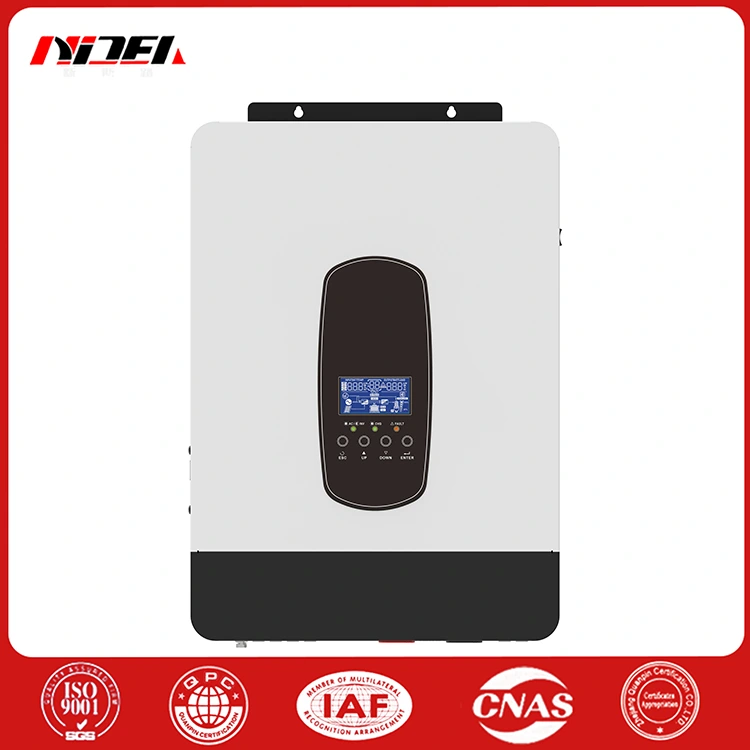
The Xinsilu Electric SP Series Household Photovoltaic Energy Storage Inverter supports an MPPT operating voltage range of 55–450VDC, providing flexibility for different photovoltaic array configurations.
However, a wide MPPT range does not mean every panel combination is suitable. Installers still need to calculate the PV string voltage under both normal and low-temperature conditions and ensure that the maximum open-circuit voltage remains within the inverter's specified limit.
| PV System Parameter | SP Series Specification | Configuration Consideration |
|---|---|---|
| MPPT Operating Voltage Range | 55–450VDC | PV array operating voltage should remain within this range. |
| Maximum PV Open-Circuit Voltage | 450VDC | Calculated string Voc must not exceed this limit. |
| Maximum PV Charging Current | Up to 110A | Charging capacity varies by inverter model. |
| Maximum PV Array Power | Up to 6000W in the listed specifications | Confirm the applicable model's PV input power limit. |
| Maximum Efficiency | Up to 98% | Maximum efficiency is not the same as MPPT tracking efficiency. |
One detail deserves attention: the maximum PV open-circuit voltage and the MPPT operating voltage range are two different specifications. The former is an electrical safety and equipment limit, while the latter defines the normal voltage window for maximum power point tracking.
For example, a PV string may operate within the 55–450VDC tracking range under normal conditions but exceed the 450VDC maximum open-circuit voltage when module temperature drops. Installers should therefore calculate the corrected open-circuit voltage using the module manufacturer's temperature coefficient before finalizing the string design.
How Does the SP Series Support Solar Energy Storage?
At Xinsilu Electric, we develop and supply integrated AC/DC power products for different power supply applications. Our product range includes AC/DC power supply panels, uninterruptible power supplies, DC operating power systems, circuit breakers, and photovoltaic energy storage solutions.
The SP Series Household Photovoltaic Energy Storage Inverter combines solar charging, battery management, and AC power conversion in one unit. Its MPPT controller is designed to support photovoltaic energy input while coordinating with the connected battery system.
SP Series Models and Rated Power
| Model | Rated Power | Battery Voltage | Maximum Charging Current | Surge Power |
|---|---|---|---|---|
| SP-2200 | 2200VA / 1800W | 12VDC | 60A | 4400VA |
| SP-3200 | 3200VA / 3000W | 24VDC | 80A | 6400VA |
| SP-4000 | 4000VA / 3600W | 24VDC | 80A | 8000VA |
| SP-7000 | 7000VA / 6200W | 48VDC | 110A | 14000VA |
These models provide different power levels for residential solar storage requirements. The SP-2200 is a lower-capacity option for smaller loads, while the SP-7000 offers a higher rated output of 6200W and supports a 48VDC battery system.
Key Features for Solar Charging and Power Conversion
- Wide MPPT input range: The 55–450VDC operating range accommodates different PV string configurations, subject to voltage and current limits.
- High-current battery charging: Maximum charging current reaches 110A on applicable models, supporting higher charging capacity when sufficient PV power is available.
- Pure sine wave output: Provides 230VAC output with a voltage regulation tolerance of ±5% in battery mode, suitable for compatible household electrical loads.
- Multiple energy supply priorities: Users can configure photovoltaic, battery, or grid power as the preferred energy source according to system requirements.
- Lithium battery compatibility: Supports lithium-ion battery applications and BMS communication for coordinated battery charging management.
- Communication interfaces: Standard RS232/RS485 interfaces support system communication and monitoring, with optional GPRS/WiFi modules available.
- Protection functions: Includes overload, over-temperature, and inverter output short-circuit protection.
For a household installation, these functions work together rather than operating independently. MPPT manages solar energy extraction, battery charging control manages energy storage, and the inverter converts DC power into AC electricity for compatible loads.
What Should Be Considered When Configuring an MPPT Solar System?
In our experience, selecting an inverter based only on its rated power is not enough. A suitable system configuration must consider PV array voltage, maximum solar input power, battery voltage, charging current, and the expected household load.
PV String Voltage and Panel Quantity
Before connecting solar panels, calculate the total string operating voltage and open-circuit voltage. The number of modules connected in series should be determined by the module's electrical specifications, especially its Vmp and Voc values.
Cold-weather voltage correction is particularly important because the open-circuit voltage of photovoltaic modules generally increases as cell temperature decreases. The calculated maximum string voltage must remain below the inverter's 450VDC limit.
Battery Voltage and Charging Current
The SP Series uses different battery voltage configurations depending on the model: 12VDC, 24VDC, and 48VDC. The battery bank must match the selected inverter model.
Maximum charging current is another important factor. For example, the SP-7000 supports up to 110A maximum charging current, while the SP-2200 supports 60A. The actual charging current also depends on available solar power, battery condition, and charging control limits.
Household Load and Surge Requirements
Rated power determines the continuous output capacity, while surge power indicates the inverter's ability to handle temporary higher power demand. Appliances with motors or compressors, such as refrigerators and pumps, may require additional starting power.
We recommend checking both the running power and starting characteristics of connected appliances instead of selecting an inverter solely according to the sum of their rated wattages.
Battery Communication and System Monitoring
For lithium battery installations, communication between the inverter and battery management system is important. BMS communication helps coordinate charging parameters and battery protection requirements.
The SP Series provides RS485 communication for BMS connection and another RS485/RS232 interface for remote monitoring. Optional GPRS or WiFi modules can also be used where remote access is required.
Where Can MPPT Household Solar Inverters Be Used?
With photovoltaic input, battery charging, and AC output integrated into one system, household solar storage inverters can serve several residential and small-scale power supply applications.
- Residential rooftop solar systems: Convert rooftop PV generation into stored electrical energy for household use.
- Home backup power systems: Work with compatible battery banks to provide backup electricity when grid power is unavailable.
- Rural and remote homes: Support solar-based electricity systems in locations where grid access is limited or unstable.
- Small residential workshops: Supply AC power for compatible electrical equipment within the inverter's rated capacity.
- Hybrid solar installations: Coordinate PV, battery, and grid energy according to the configured power supply priority.
Actual system performance depends on solar panel capacity, local sunlight conditions, battery sizing, load characteristics, and installation quality. Proper electrical design remains essential for reliable operation.
Why Work with Xinsilu Electric for Power Supply Solutions?
New Idea Electric Co., Ltd., operating under the Xinsilu Electric business identity, is a manufacturer in the power supply industry with production facilities in Zhejiang and Shenzhen, supported by sales companies in Beijing, Zhejiang, and Sichuan.
Our business focuses on research and development, precision manufacturing, and sales of integrated AC/DC power products. In addition to household photovoltaic energy storage inverters, our product portfolio covers several power distribution and backup power categories.
For customers evaluating different power supply solutions, our product range includes:
- AC/DC Power Supply Panels for integrated power distribution applications.
- Uninterruptible Power Supply (UPS) systems for backup power requirements.
- DC Operating Power Systems for DC power supply applications.
- Household photovoltaic energy storage inverters for solar power conversion and battery charging.
With five operational offices in Nanjing, Zhengzhou, Jinan, Kunming, and Dalian, we maintain a business network covering multiple regional markets. This manufacturing and sales structure supports our work across different power supply product categories.
Frequently Asked Questions
1. What does MPPT mean in a solar energy storage inverter?
MPPT stands for Maximum Power Point Tracking. It is a control technology that adjusts the operating voltage and current of a photovoltaic array to obtain the highest available power under current sunlight and temperature conditions. In a solar energy storage inverter, it helps optimize the energy transferred from solar panels to the battery charging system.
2. What is the MPPT voltage range of the SP Series inverter?
The SP Series Household Photovoltaic Energy Storage Inverter supports an MPPT operating voltage range of 55–450VDC. Its maximum PV array open-circuit voltage is 450VDC. PV string configuration must meet both specifications, including the temperature-corrected open-circuit voltage.
3. What is the maximum charging current of the SP Series?
The maximum charging current depends on the selected model. The SP-2200 supports 60A, the SP-3200 and SP-4000 support 80A, and the SP-7000 supports 110A. Actual charging current depends on available PV power, battery requirements, and charging control settings.
4. Can the SP Series inverter work with lithium batteries?
Yes. The SP Series supports lithium-ion battery applications and provides BMS communication functionality. The battery voltage and communication protocol should be checked against the selected inverter model and battery manufacturer's requirements before installation.
5. Does MPPT technology increase solar panel power generation?
MPPT does not increase the rated power of solar panels. Instead, it helps the PV array operate closer to its maximum available power point under changing environmental conditions. The resulting energy improvement depends on the PV array, weather, system design, and controller performance.
6. What is the difference between MPPT voltage range and maximum PV voltage?
The MPPT voltage range is the operating window in which the controller can track the maximum power point. Maximum PV open-circuit voltage is the upper electrical input limit that the PV array must not exceed. Both values must be considered when designing a solar panel string.
7. Why is pure sine wave output important for household applications?
Pure sine wave output provides an AC waveform suitable for a wide range of compatible household appliances and electronic equipment. The SP Series provides 230VAC output with ±5% voltage regulation in battery mode and automatic 50Hz/60Hz frequency sensing.
8. Can the SP Series inverter be monitored remotely?
The SP Series provides RS232/RS485 communication interfaces for system communication. Optional GPRS/WiFi communication modules are also available, allowing remote monitoring through compatible devices and software.
For additional information about MPPT operation, refer to the Schneider Electric Conext MPPT Operation Guide and Yokogawa's MPPT Technical Application Note.
At Xinsilu Electric, we recognize that efficient solar charging depends on more than the MPPT controller alone. PV array design, battery compatibility, charging current, and inverter output capacity all influence the performance of a household energy storage system. Our SP Series provides multiple power ratings and a wide PV input voltage range to address different residential solar storage requirements.
Related News
- How Can an 8200W Off Grid Solar Inverter Support Different Power Needs?
- What Core Functional Advantages Does SP Series Household Photovoltaic Energy Storage Inverter Bring To Residential Renewable Energy Layouts?
- How Do DC Operating Power Systems Support Stable Industrial Power Distribution?
- Why Choose High Frequency Series UPS for Next-Level Power Protection?
- How Does a Communication Power Enhance Modern Network Reliability?
- What Are Circuit Breakers?
Leave me a message
New Products


News Recommendations